An Individual Taxpayer Identification Number (ITIN) is a tax identification number used for federal tax purposes by an individual who is not eligible for a Social Security number. For families, an ITIN can allow a child or another dependent to be identified on a U.S. federal tax return when the person meets the applicable requirements.
A child may need an ITIN when the child is not eligible for an SSN but is listed on a federal tax return for an allowable tax benefit. The need for an ITIN is therefore connected to the family’s federal tax filing and the child’s role on that return—not simply to the child’s age or dependent relationship.
Parents and other applicants should review the IRS rules for the specific person included on the return. The IRS explains the purpose of an ITIN and the circumstances in which an individual may need one in its Individual taxpayer identification number (ITIN) guidance.
Introduction to ITINs for Dependents
An Individual Taxpayer Identification Number (ITIN) is a tax identification number used for federal tax purposes by an individual who is not eligible for a Social Security number. For families, an ITIN can allow a child or another dependent to be identified on a U.S. federal tax return when the person meets the applicable requirements.
A child may need an ITIN when the child is not eligible for an SSN but is listed on a federal tax return for an allowable tax benefit. The need for an ITIN is therefore connected to the family’s federal tax filing and the child’s role on that return—not simply to the child’s age or dependent relationship.
Parents and other applicants should review the IRS rules for the specific person included on the return. The IRS explains the purpose of an ITIN and the circumstances in which an individual may need one in its Individual taxpayer identification number (ITIN) guidance.
Eligibility Criteria for ITINs
A child, dependent, or spouse generally needs an ITIN when they are not eligible for a Social Security number but must be included on a U.S. federal tax return for an allowable tax benefit. Being related to the taxpayer, by itself, does not establish eligibility. The application must be connected to a qualifying federal tax purpose.
For a child or other dependent, the applicant must generally provide documentation supporting identity, foreign status, and U.S. residency, unless an applicable exception changes those requirements. The taxpayer may also need to show the dependent’s connection to the federal tax return. A spouse may similarly need an ITIN when the spouse is included in a federal tax filing for an allowable tax purpose and does not qualify for an SSN.
The IRS recognizes exceptions to the standard dependent and spouse requirements. Special rules may apply to certain dependents or spouses of U.S. military personnel and to certain residents of Canada or Mexico. These exceptions can affect the documentation or tax-return information required, so applicants should review the applicable category in the IRS information on individual taxpayer identification numbers before submitting Form W-7.
An ITIN is not issued simply because a person is a child, dependent, or spouse. Eligibility depends on the applicant’s circumstances and the specific federal tax purpose supporting the request.
Required Documentation
An ITIN applicant generally must provide documentation that establishes three points:
- Identity
- Foreign status
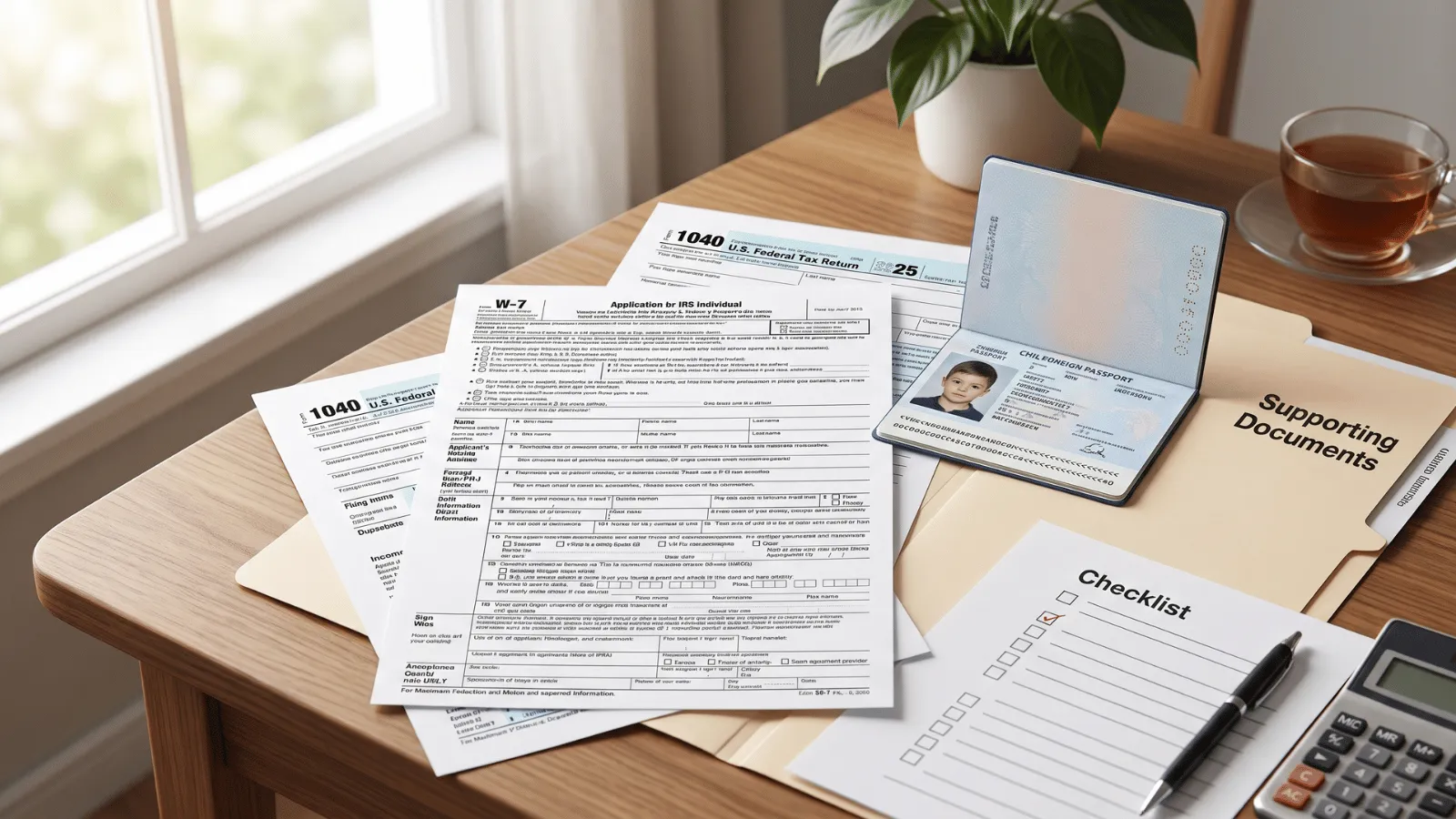
- U.S. residency, unless an applicable exception applies The documents must be either original documents or copies certified by the agency that issued them. Ordinary photocopies are not sufficient under the IRS document standards. Because the acceptable documentation can depend on the applicant’s circumstances, use the IRS’s ITIN supporting documents guidance to confirm which documents may be submitted.
For a child or other dependent, the documentation must support the information for that individual applicant. Parents, guardians, or other family members should organize the child’s or dependent’s identity, foreign-status, and residency evidence rather than assuming that the adult’s documents will satisfy the applicant’s requirements. The same original-document or issuing-agency-certified-copy standard applies unless an exception changes what is required.
Before submitting Form W-7, compare each document with the IRS requirements and confirm that the package addresses all applicable documentation categories. If an exception applies, follow the documentation rules for that exception instead of assuming the standard requirements are unchanged.
Common Mistakes in ITIN Applications
Small documentation errors can make an ITIN application incomplete. Parents, dependents, and spouses should review the application package carefully before submitting it.
Submitting Incorrect Documentation
One frequent mistake is sending documentation that does not support the applicant’s identity, foreign status, or other information required for the application. Documents should correspond to the person applying, and the information should be consistent with the Form W-7 and any accompanying tax filing.
Applicants should also follow the IRS rules for acceptable supporting documents rather than assuming that any personal record will qualify. The IRS instructions on how to apply for an ITIN explain the application steps and documentation standards. Review the current instructions before submitting the package, especially when applying for a child or another dependent.
Filing Without Proper Residency Proof
Another mistake is filing without the required proof of U.S. residency when that proof applies to the applicant’s situation. A dependent’s application may need documentation that establishes the person’s U.S. residency, so do not assume that the tax return alone supplies every required detail. Check the applicable requirements and include the appropriate supporting evidence with the application.
Before sending the application, compare the Form W-7, tax return, and supporting documents for consistent names and identifying information. If you want help reviewing the requirements and preparing your application, visit the ITIN application page.
The Role of IRS-authorized Certifying Acceptance Agents
An Acceptance Agent (AA) can help an applicant prepare an ITIN application, while an IRS-authorized Certifying Acceptance Agent (CAA) can also review eligible supporting documents under IRS rules as part of the certification process. This distinction can be useful when a parent, dependent, or spouse is applying and wants assistance organizing the application package.
A CAA may help you:
- prepare or review Form W-7;
- review the application package for completeness and consistency;
- examine eligible supporting documents and authenticate them within IRS requirements;
- assist with submitting the application; and
- return eligible original documents when applicable.
The CAA does not replace the IRS or decide whether an ITIN will be issued. Instead, the CAA’s role is to help present the application and supporting documentation in the required manner. The applicant remains responsible for providing accurate information and documents that meet the applicable IRS standards.
If you are applying for a child, dependent, or spouse, an IRS-authorized Certifying Acceptance Agent can explain the steps involved and help you understand how the certification process applies to your situation. Explore how our IRS-authorized CAA services can assist you in applying for an ITIN.