ITIN for Canadian Citizens: When You Need One and How to Apply
An ITIN for Canadian citizens is needed when a Canadian has a U.S. tax obligation but cannot get a Social Security Number. The usual cases are a U.S. rental property, the sale of U.S. real estate, U.S.-source income that needs a return, and a Canadian spouse or dependent claimed on a U.S. return.
Canada has an income tax treaty with the United States, and the W-7 instructions also treat a Canadian address favorably on box f.
This guide explains who needs one, how the days-present test affects Canadians who spend winters in the U.S., which W-7 reason applies and how to apply from Canada.
| Question | Short answer |
|---|---|
| Is there a U.S.–Canada income tax treaty? | Yes, Canada is on the IRS treaty list |
| Main document | A valid Canadian passport |
| Visa on box f? | Not required if your foreign address is in Canada |
| Do snowbirds need an ITIN? | Only if they have a filing requirement |
| Can you apply from Canada? | Yes |
| Typical timeline | About 7 weeks; 9 to 11 weeks from overseas or in peak season |
When a Canadian Needs an ITIN
You need an ITIN if you must file a U.S. return or are named on one and have no SSN.
Common examples:
- You own a vacation home or investment property in the U.S. and receive rent.
- You sold U.S. real estate and have a U.S. reporting requirement.
- You are a nonresident with U.S. income that requires a Form 1040-NR.
- You are the spouse or dependent of a U.S. citizen or resident alien.
- You need a treaty benefit that requires an ITIN.
If none of these applies, you probably do not need one. Check with Do I need an ITIN?.
Snowbirds and the Days-Present Test
The IRS treats a foreign national as a U.S. resident for tax purposes if they meet the substantial presence test, which counts the days present in the current year plus a fraction of the days in the two prior years.
A Canadian who spends long winters in the U.S. can cross that line without noticing.
If you meet the test, you may be a resident alien for tax purposes (reason box c when you file a return), unless you qualify for an exception such as the closer connection exception, which you claim on Form 8840.
Work out your days first, because the answer decides which form you file and which W-7 box you check.
You can review the IRS substantial presence test for the official calculation rules.
Which W-7 Reason Box Applies
The correct reason box depends on your U.S. tax situation, not simply on your Canadian citizenship.
- Box a (with h): Nonresident alien claiming a treaty benefit. Name Canada and the treaty article.
- Box b: Nonresident alien filing a U.S. return.
- Box c: Resident alien under the days-present test who files a return.
- Boxes d, e and g: Spouse or dependent of a U.S. citizen, resident alien or nonresident alien visa holder, as applicable.
- Box f: Nonresident student, professor or researcher. A qualifying Canadian foreign address removes the need to provide a U.S. visa.
Choosing the correct W-7 reason is particularly important for snowbirds, because spending enough time in the United States can affect tax residency and filing obligations.
For detailed eligibility and documentation requirements, consult the official IRS Instructions for Form W-7.
Documents and the Canada Rule
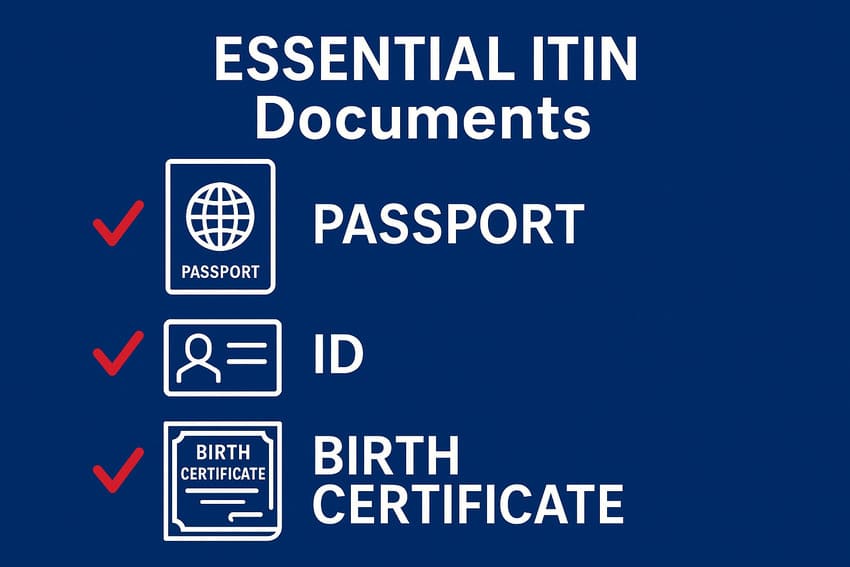
A valid Canadian passport proves both identity and foreign status.
The W-7 instructions state that no U.S. visa needs to be provided on box f if the foreign address is in Canada, Mexico or Bermuda.
Copies must be certified by the issuing agency, since the IRS does not accept notarized copies.
The IRS also has special rules for some dependents from Canada and Mexico. Read the current W-7 instructions or ask an agent before preparing a dependent's application.
The documents checklist has the complete list of acceptable identification documents.
Spending Part of the Year in the U.S.?
Have your reason box and day count reviewed before you file.
TaxGov can help you review your ITIN application and supporting documents.
Start your ITIN application or learn about our ITIN application service.
Rental Income and Selling Property
Canadians who rent out U.S. property are generally subject to a 30% tax on gross rental income, unless a reduced treaty rate or another applicable tax treatment changes the result.
Eligible nonresident property owners may elect to treat rental income as income effectively connected with a U.S. trade or business and report it on Form 1040-NR.
A U.S. taxpayer identification number is generally needed when filing the applicable tax return.
Selling U.S. real estate can also trigger reporting and withholding requirements, making a taxpayer identification number necessary.
For more information about these situations, read ITIN for rental income and property ownership.
How to Apply from Canada
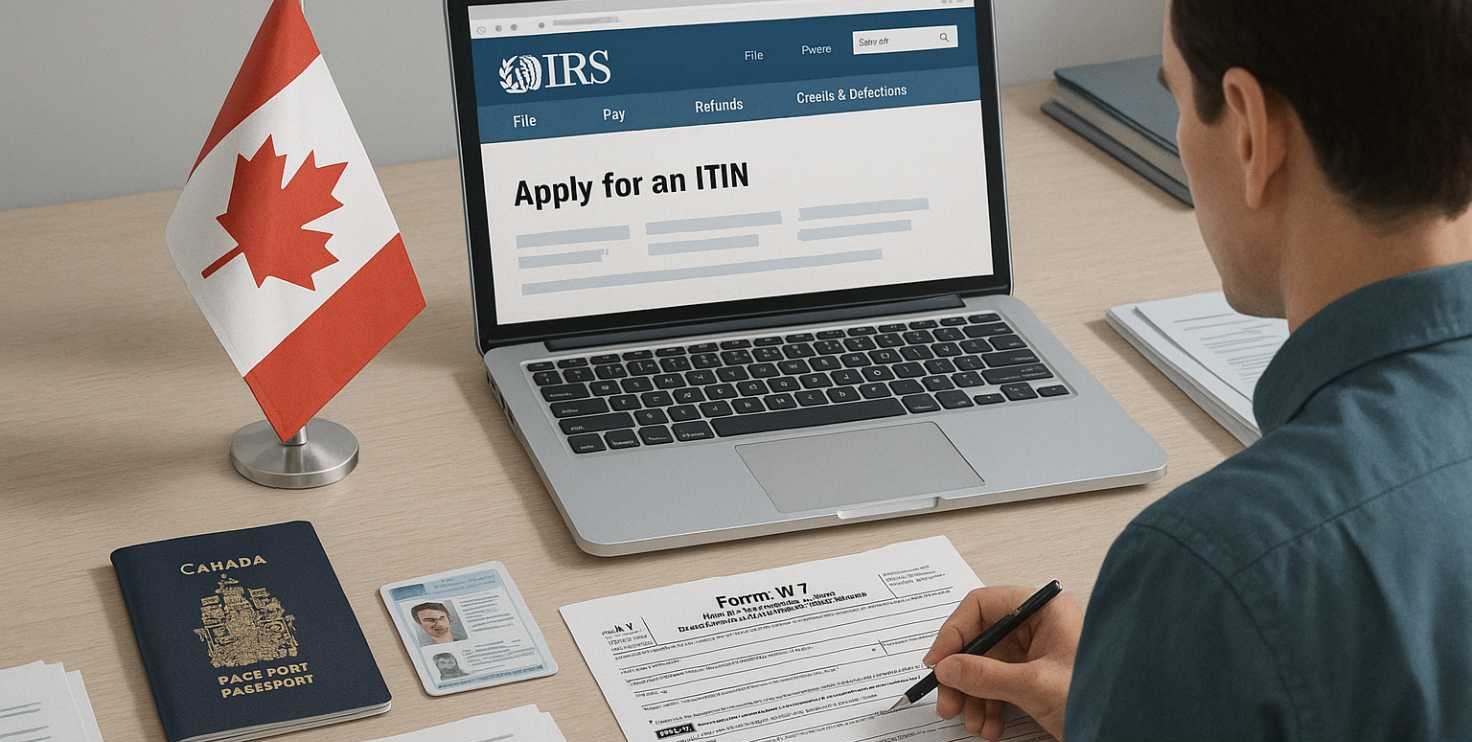
Canadian citizens can apply for an ITIN without permanently residing in the United States.
The available application methods include:
- Mail your application to the IRS. Submit Form W-7, the required federal tax return unless an exception applies, and acceptable supporting identification documents.
- Use a Certifying Acceptance Agent. An authorized agent can authenticate eligible original identification documents so you may not need to mail your passport to the IRS.
- Visit an IRS Taxpayer Assistance Center. If you are in the United States, you may be able to arrange an appointment at a participating center offering document authentication services.
The IRS publishes a list of acceptance agents by country.
Applications submitted from overseas generally take longer than domestic applications. The IRS indicates approximately 9 to 11 weeks for overseas applications or those submitted during peak processing periods.
For detailed instructions, read how to apply for an ITIN from outside the United States.
For a broader overview, visit ITIN for non-U.S. citizens by country.
You may also find these country guides useful:
Related Reading
- Do I need an ITIN?
- Documents needed for an ITIN application
- ITIN for rental income and property ownership
Spend Winters in the U.S.?
Get your day count and reason box checked before you file.
TaxGov is an independent IRS-authorized Certifying Acceptance Agent service. We can help review your Form W-7 and supporting documents.
Start your ITIN application · Have a question? Contact us
Transparency: You can apply directly through the IRS at no cost. TaxGov is not a government agency; its assistance is optional.