An Individual Taxpayer Identification Number (ITIN) is a nine-digit number the IRS issues to people who need a U.S. taxpayer ID but are not eligible for a Social Security Number (SSN).
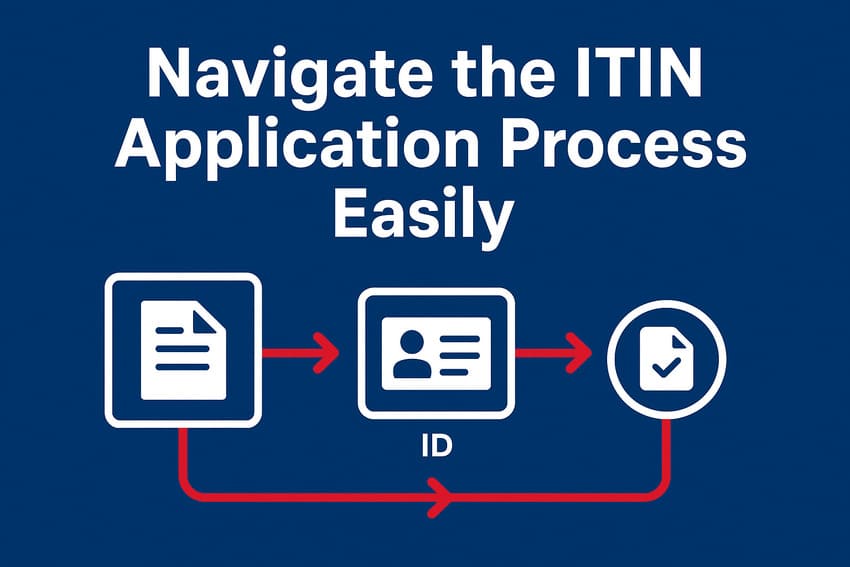
Applying for an ITIN means filing Form W-7 with the IRS, together with proof of identity and foreign status. You can mail the form directly to the IRS, apply in person at a Taxpayer Assistance Center, or go through a Certifying Acceptance Agent (CAA) who can verify your original documents without you having to mail them away.
ITIN application at a glance
| Step | What happens | What matters most |
|---|---|---|
| Check you don't already qualify for an SSN | Most applicants are non-resident aliens, dependents, or spouses |
| State your reason for applying (code a-h) | Pick the correct reason code or the IRS will reject the form |
| A passport alone usually suffices | Other document combos require two separate proofs |
| Mail, Taxpayer Assistance Center, or CAA | A CAA avoids mailing original passports to the IRS |
Who needs to apply for an ITIN
You generally need an ITIN if you must file or be listed on a U.S. tax return and are not eligible for an SSN. That covers non-resident aliens with U.S.-source income, resident aliens filing under the substantial presence test, and dependents or spouses of U.S. citizens and resident aliens. See who needs an ITIN for the full eligibility breakdown.
Documents you'll need
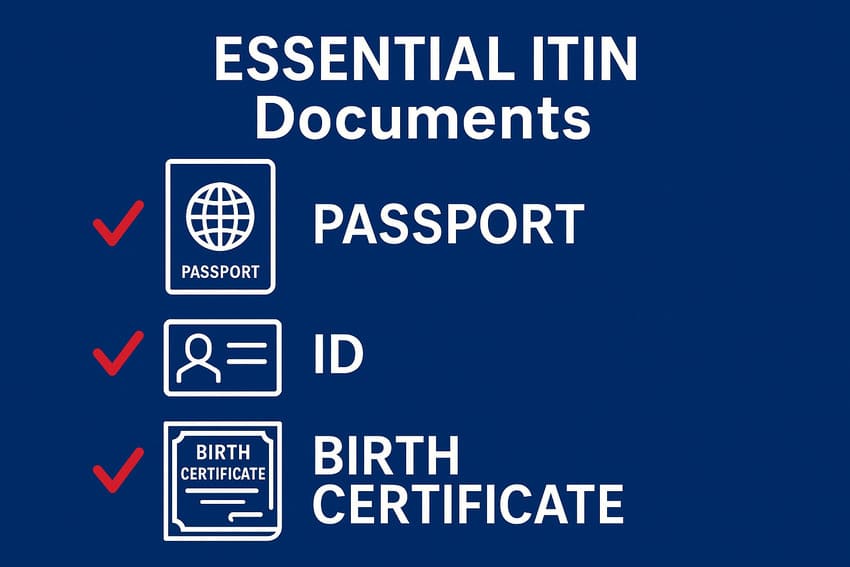
A valid, unexpired passport is the only document the IRS accepts on its own, because it proves both identity and foreign status in one document. Without a passport, you need two documents from the IRS's accepted list, and at least one needs a photo. See the full accepted-documents list before you start.
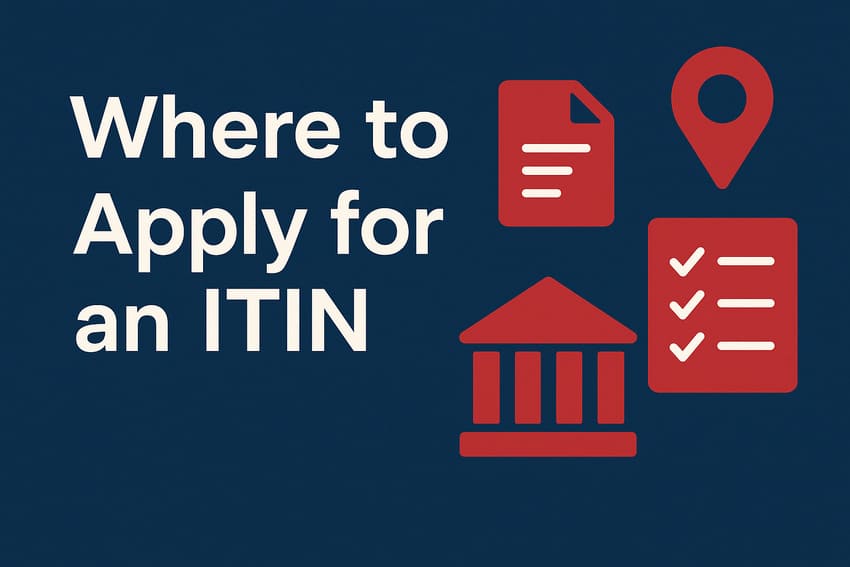
Three ways to submit your application
- By mail — send Form W-7, your tax return, and original (or certified copy) ID documents to the IRS ITIN Operations address. Documents are returned by mail, usually within 60 days.
- In person at a Taxpayer Assistance Center (TAC) — book an appointment, bring your documents, and they're verified on the spot.
- Through a Certifying Acceptance Agent (CAA) — a CAA (like TaxGov) reviews and certifies your documents directly, so originals never leave your hands, and submits the certified package to the IRS on your behalf.
What happens after you submit
Once the IRS receives a complete application, processing generally takes about seven weeks, longer during the January–April filing season or if you're applying from abroad. If something is missing, the IRS sends a notice rather than issuing the number — that's the single biggest cause of delay, so double-check your reason code and documents before you send anything.