If the IRS sends back your Form W-7, it's almost always one of a handful of fixable problems — not a dead end. This guide covers both outcomes you might get: a rejected application (something was incomplete or incorrect) and a formal denial (the IRS determined you don't qualify as submitted).
Rejected vs. denied: what's the difference
- Rejected usually means a document or form issue — missing signature, expired ID, wrong reason code. See how to fix a rejected application.
- Denied means the IRS reviewed your eligibility and determined, as submitted, you don't qualify. See what to do after a denial.
The most common fixable errors
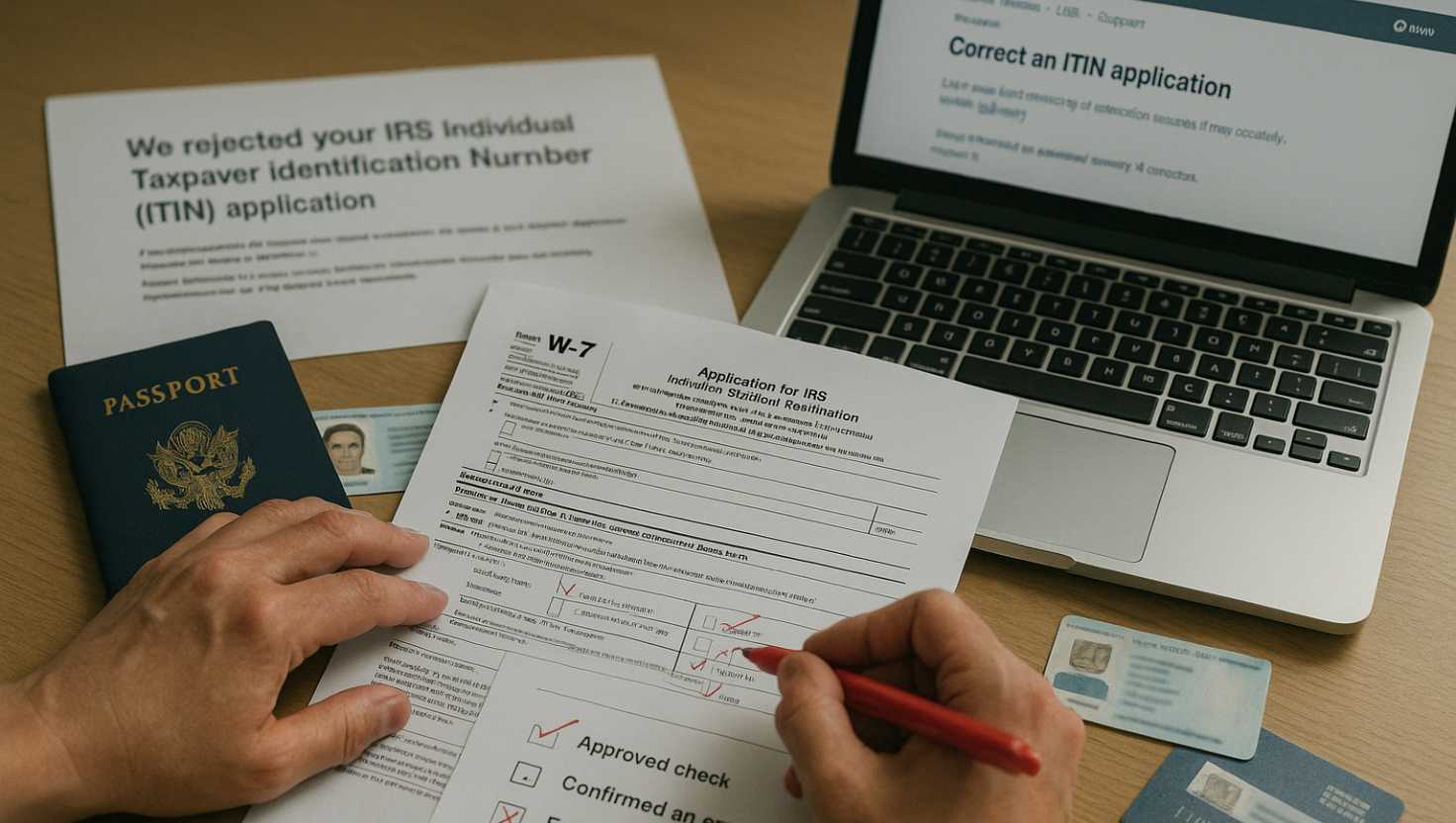
Wrong reason code on Form W-7, an expired passport or ID, a document combination the IRS doesn't accept, or a missing tax return attachment. Check the accepted-documents list before resubmitting.
How to resubmit
Read the IRS notice carefully — it states exactly what was wrong. Correct that specific issue, keep the rest of your original package intact, and resubmit. A Certifying Acceptance Agent can review the corrected package before it goes back to the IRS, which avoids a second rejection on an unrelated issue.